
Rebuilding after wildfire
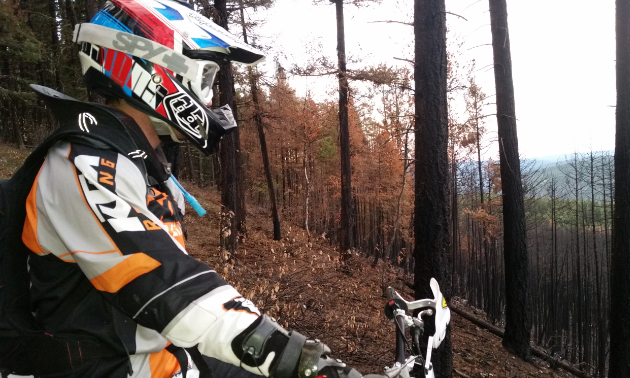
Image: Braden Fontaine and Williams Lake Off Road Motorcycle Association
The impacts of wildfires on recreation and tourism far outlast the flames and smoke.
A line in the ash separates the dirt-biking experience in Williams Lake before and after the fire.
Before, dirt bikers could choose from two large trail networks, Bull Mountain, a designated Recreation Sites and Trails area, and Wildwood, an unsanctioned network, plus a half dozen smaller destinations.
In July 2017, that all changed. Wildfires burned through the Williams Lake area, burning a chunk of the Bull Mountain trail network and all of Wildwood.
“It was a pretty big deal,” says Braden Fontaine, a director with the Williams Lake Off Road Motorcycle Association, which maintained both networks. “It wasn't just losing a couple of trails. We lost these larger areas where you could go and ride a whole bunch of different trails in one place. It also meant we lost places where we could hold events and get a lot of riders together.”
Almost a decade later, dirt biking and dirt bike tourism is just starting to regrow. Williams Lake shows that, while the disruptive nature of an actively burning fire is obvious, what’s often overlooked is the long, slow path to recovery and what that means for tourism.
“It can take years of work afterward to get those recreation areas back to where they were,” says Fontaine. “There’s a pretty significant lag between losing the trails and actually seeing the recreation and tourism activity return.”
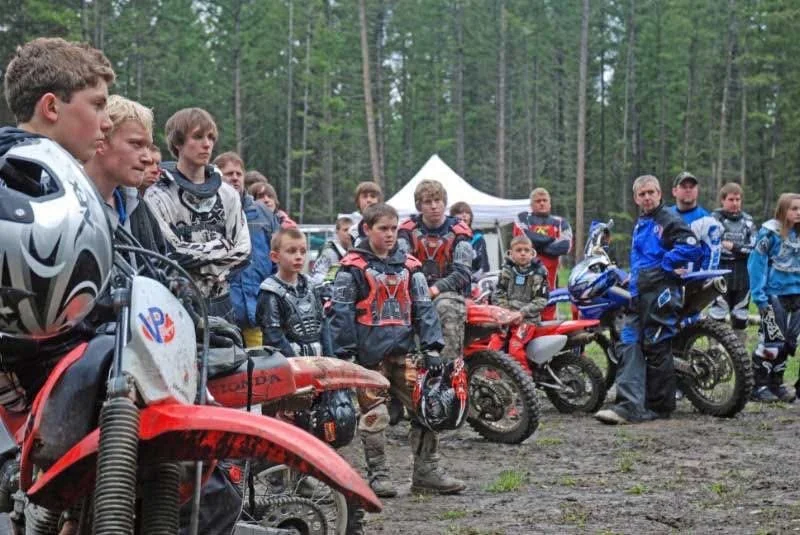
Image: Williams Lake Off Road Motorcycle Club
Williams Lake was not the only community impacted by the 2017 wildfire season. In the aftermath the Cariboo Chilcotin Tourism and the Kootenay Rockies Tourism both studied the impact of the fires on tourism in their respective regions. The eye-catching finding: fires hurt almost every business, even though less than a quarter were directly impacted. As one person put it, people don’t know geography. If the Okanagan makes the news for wildfires or smoke, then many think the whole region is on fire and stay away.
Efforts to quantify the long-term impacts are less common. A University of Colorado study used open-source data from sites like AllTrails, Flickr and eBird to measure the impact of wildfires on trail traffic. They compared trail use before and after a wildfire and, to control for other variables, compared the results to similar unburned trail networks over the same period. The study found visitation to burned sites fell by eight to 30 percent in the year of the fire, with the variability depending on the fire's severity. More striking: the declines did not recover during the five years of the study.
There were caveats: grassland areas did not experience as much decline, and visitation rebounded faster. The theory is that being among trees is part of why people visit forested areas, while visiting grasslands is more about the wide open. Plus, grasslands regrow within a year or two; forests take decades. The study also found the declines in visitation rebounded faster in California. The researchers thought this might be because Californians are more used to wildfires.
Those nuances hint that there will be regional differences.
The 2023 Bush Creek East wildfire burned several trails in the Shuswap area, many of which are maintained by the Shuswap Trail Alliance (STA), including the most popular hike, the Mount Baldy Trail. It took three years to complete the remediation and reopen Baldy: removing dangerous trees, conducting geotechnical assessments, rebuilding boardwalks and bridges, and adding new safety signage. But because the Shuswap area has so many hiking options, the impact to tourism was limited, says Jen Bellhouse, executive director of the STA.
“People are disappointed when they can’t hike a trail because it’s closed from wildfire,” she says. “But there are five other options that didn’t burn within a 20-minute drive of Mount Baldy.”
The Bush Creek East fire also burned through Tsútswecw Provincial Park, home to the world-famous Adams River sockeye salmon run. It took BC Parks three years and $ 2.1 million to rebuild the viewing platforms and interpretive trails along the river. But instead of cottonwood and red cedar trees, fish-fans now wander among fireweed, elderberry and thimbleberry shrubs. Visiting the park is a different experience than it was in the past and some people struggle with that, Bellhouse says.
“When something is set for so long, it’s hard to recognize that change is a natural part of the landscape,” she says. “Fire is part of the landscape.”
A more permanent loss is the park’s Upper Flume Trail. The fire burned so hot here it not only destroyed the wooden chutes loggers once used to move logs down to the river, it also damaged the soil structure. BC Parks says the slope is too unstable to rebuild the trail.
Elsewhere, wildfire recovery created opportunities to improve outdoor recreation. A 2017 fire burned to the edge of the town of Logan Lake, destroying much of the community forest trail network. Disaster relief funding helped rehabilitate the trails, with enough left over for the district to hire Lees & Associates to improve the trail inventory.
The planning consultants engaged the community and trail users to uncover where there were gaps in the existing network. The community forest and local clubs are now adding ORV highway crossings, trail connections and new destination trails outside of the burned areas. The idea, says Megan Turnock, a principal with Lees & Associates, is to diversify the recreation options.
“Trail networks are often very specific to one area, which makes them vulnerable to fires,” she notes. “In a bigger area, with more trails, it’s unlikely the whole network will be impacted all at once.”
Unlikely, but not impossible, as the dirt bikers in Williams Lake discovered.
Since the 2017 fires, the Williams Lake Off Road Motorcycle Association has worked to rehabilitate the trails at Bull Mountain in collaboration with Recreation Sites and Trails and consultants. By 2024, the club had opened enough trails to host its first event since the fire. But they still haven’t started the main thrust of the work, says Fontaine.
“One of the biggest things I've learned is that you can't just go in after a fire and start rebuilding a trail,” he says. “There are extra steps involved in making sure the ground has recovered enough to withstand motorized use again. It's a longer process, but it's an important one. We want to make sure we're not doing more damage and that the environment has a chance to regrow and support riding again in the long term.”
He’s less hopeful about reopening Wildwood. Unlike at Bull Mountain, no funding is available to rehabilitate those trails.
“Because they weren't registered, that entire riding area was essentially lost when the fire came through,” he says.
Convincing travelling dirt bikers to return to Williams Lake will also be challenging, he says. The club’s annual events were the main draw for out-of-town riders. When events were cancelled for several years, those potential tourists found other places to go. Getting them to come back will take time.
“The big lesson from our experience is to think about wildfire resilience before a fire happens,” says Fontaine. “Have your trails documented and registered where possible, build relationships with government agencies, and have a plan for what happens if a major fire impacts your recreation area. That can make the recovery process a lot easier and give clubs a better chance of getting people back into the area sooner.”
Author: Ryan Stuart.