
What B.C.’s outdoor recreation groups get done
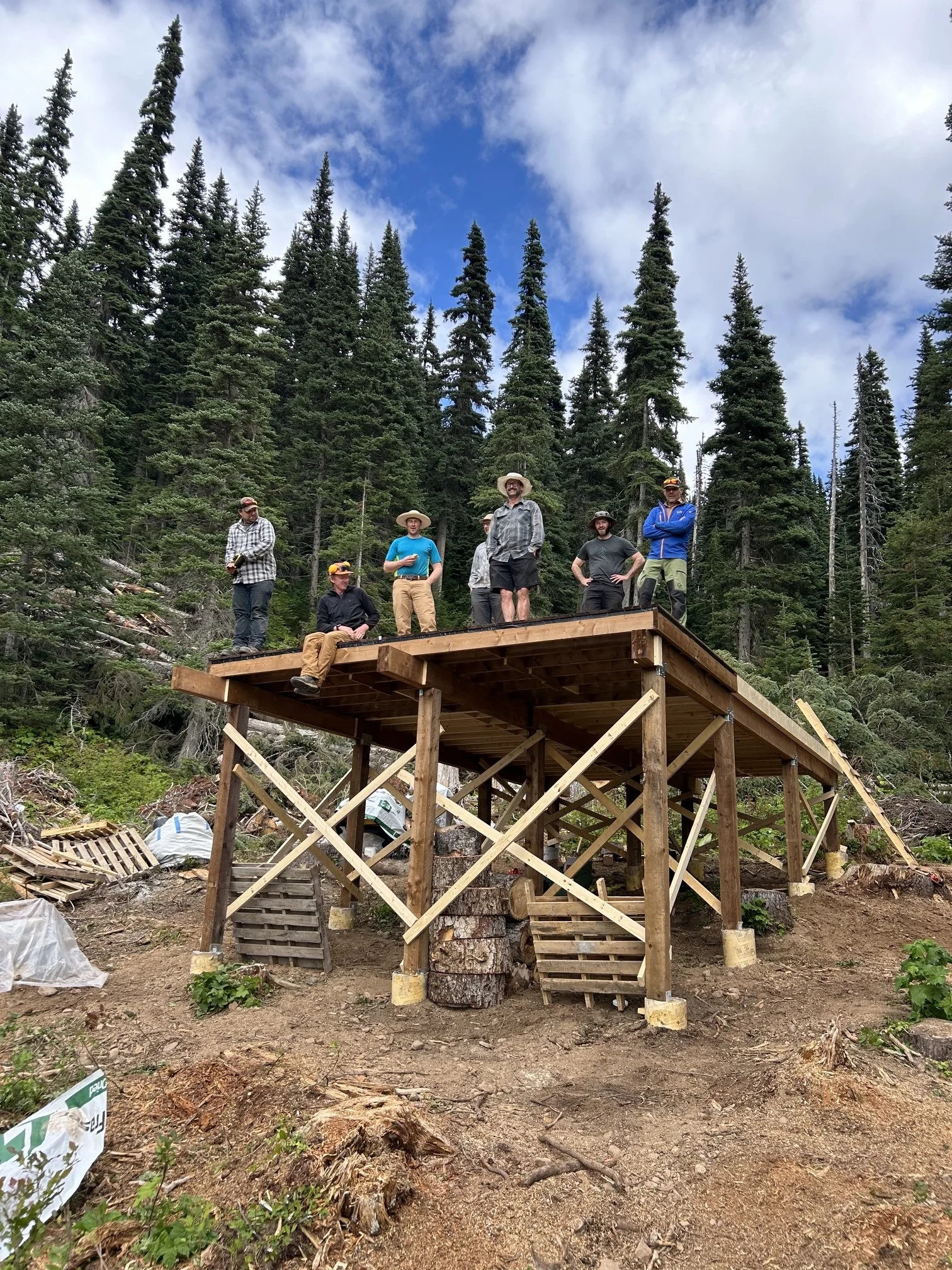
Image: Bulkley Backcountry Ski Society
Outdoor recreation groups and volunteers are the unsung heroes keeping British Columbia’s trails, campsites, and outdoor spaces alive. To capture their true impact, ORCBC launched a pilot project standardizing how metrics, from volunteer hours to funding models, are tracked across the province. Here is a look at what the data reveals about these hardworking organizations and how unified tracking can help secure a more sustainable future for B.C.'s outdoors.
Outdoor recreation clubs and volunteers are the backbone of B.C.’s outdoor recreation spaces. They advocate for access, build and maintain trails, campsites, boat launches, parking lots and other assets, and build community through events and outreach.
Despite their enormous contribution, the full impact of these organizations is often difficult to measure. Many groups already track volunteer hours, trail maintenance, stewardship efforts, events, and other outcomes. They do this to demonstrate their impact, report back to funders and the community, and track their performance.
The North Shore Mountain Biking Association (NSMBA) has used their stats not only to showcase the amount of work that goes into their trail network, but also to come up with an innovative funding model. As part of their Trail Adoption Program (TAP), organizations can adopt a trail for an annual donation. Their contribution supports the maintenance of that trail through funding trail crew work as well as the option to bring out their employees or community members for trail maintenance days. The program contributes thousands of volunteer maintenance hours to NSMBA’s trail maintenance program and about a fifth of the organization’s income. In 2025, 28 TAP partners adopted 31 trails and funded close to 150 trail days. These metrics help the NSMBA communicate its impact, report volunteer hours to the District, and acquire new sponsors, all of which helps for both advocacy and funding.
Tracking metrics helps organizations decide where to put their efforts in and showcasing their impact to potential funders. But every organization tracks a little differently. Without a common approach, it is challenging to demonstrate the collective value of the outdoor recreation sector and communicate its impact to funders, partners, governments, and the public.
That’s where ORCBC comes in. As the provincial umbrella, ORCBC aims to collect consistent data from recreation organizations across British Columbia to help tell a unified story about the people, places, and partnerships that sustain outdoor recreation. Common metrics allow us to highlight the scale of volunteer contributions, identify trends and gaps, demonstrate the sector's economic, social and environmental value and strengthen advocacy for continued investment.
In spring 2026, ORCBC launched a pilot project to measure the impact of the nonprofit outdoor recreation sector. The goal was to test a reporting method with ORCBC member organizations that informs a long-term approach to measuring impact, identifies commonly tracked metrics and provides an idea of what outdoor recreation groups achieve collectively.
What a typical outdoor recreation group gets done
In asking ORCBC members and affiliates for their data, we reached approximately 130 organizations and received 32 responses. Although a 25% response rate is common, the results must be interpreted with caution, as the small sample size is not representative. Nevertheless, the results give us a sense of what outdoor recreation groups accomplish with little resources.
Membership & volunteer engagement:
A typical outdoor recreation organization in B.C. in 2025:
Had 470 members
Engaged 55 volunteers contributing 2,136 volunteer hours
If we were to extrapolate the numbers to 400 recreation organizations, that would be over 850,000 volunteer hours per year. Again, the sample wasn’t representative, but we wouldn’t be surprised if the extrapolated number is quite accurate.
Recreation asset management:
A typical outdoor recreation organization in B.C. in 2025:
Managed 120 km of trails and maintained or upgraded half of that (60 km)
Opened 1 new recreation asset (e.g., campsites, parking lots, cabins, trailhead kiosks, bridges, boardwalks)
Maintained or enhanced 4 recreation assets (e.g., campsites, outhouses, picnic tables, cabins, lookout towers, shelters, bike skills parks)
Had 3,000 trail or waterway users
Had 3 formal and active partnerships with land managers and 2 additional partnerships
Considering how many hours go into maintaining a km of trail, into establishing and stewarding partnerships, and into planning new recreation assets, these numbers show that outdoor recreation groups get a lot done. After all, there are no trail fairies, but real people who often volunteer their time to keep outdoor spaces safe and enjoyable.
Community engagement and outreach:
A typical outdoor recreation organization in B.C. in 2025:
Engaged 753 participants in programs and events
Reached 6,585 people through communications and outreach
Engaged one Indigenous person through programs, employment or advisory roles, and had one Indigenous partnership
Engaged 25 youth through programs and events
Organizational capacity:
A typical outdoor recreation organization in B.C. in 2025:
Had 1 paid part-time staff
Raised $43,700 in funding
The majority comes from membership fees (35.9%)
Organizations are highly successful in acquiring grants (32.1%)
Donations make up 11.87%, followed by fee for service & social enterprise revenue (10%) and programs and events (7.3%)
A smaller amount of funds is raised through sponsorships (1.9%), interest (0.3%), other fundraising (0.3%) and merchandise (0.1%).
Leveraged an additional $4,250 through partnerships
Had no sustainable multi-year funding
While it may not be surprising that membership fees make up a substantial portion of an organization’s budget, corporate sponsorships seem to be an untapped resource.
Having no multi-year funding indicates a strong need for more sustainable funding solutions.
Organizations also care for the environment. Many clean up garbage and debris, pull invasive species, and plant native plants.
What we learned
Above all, we learned about the incredible amount of work that outdoor recreation groups accomplish in a year.
We learned that everyone tracks their efforts a little differently and that many are eager to use data to communicate their impact.
We also learned that we need easy-to-use reporting tools that work for a variety of groups across the Province.
A big thank-you to everyone who shared their reports with us!
Next steps
ORCBC is actively exploring ways to develop and use user-friendly tools to track metrics and use the data to demonstrate economic, social and environmental impact, highlight stewardship efforts and environmental outcomes, share successes and stories that might otherwise be invisible, and over time, manifest growth in participation and reach. Together, we can showcase the impact of the outdoor recreation sector and make everyone’s work easier, not cumbersome.