
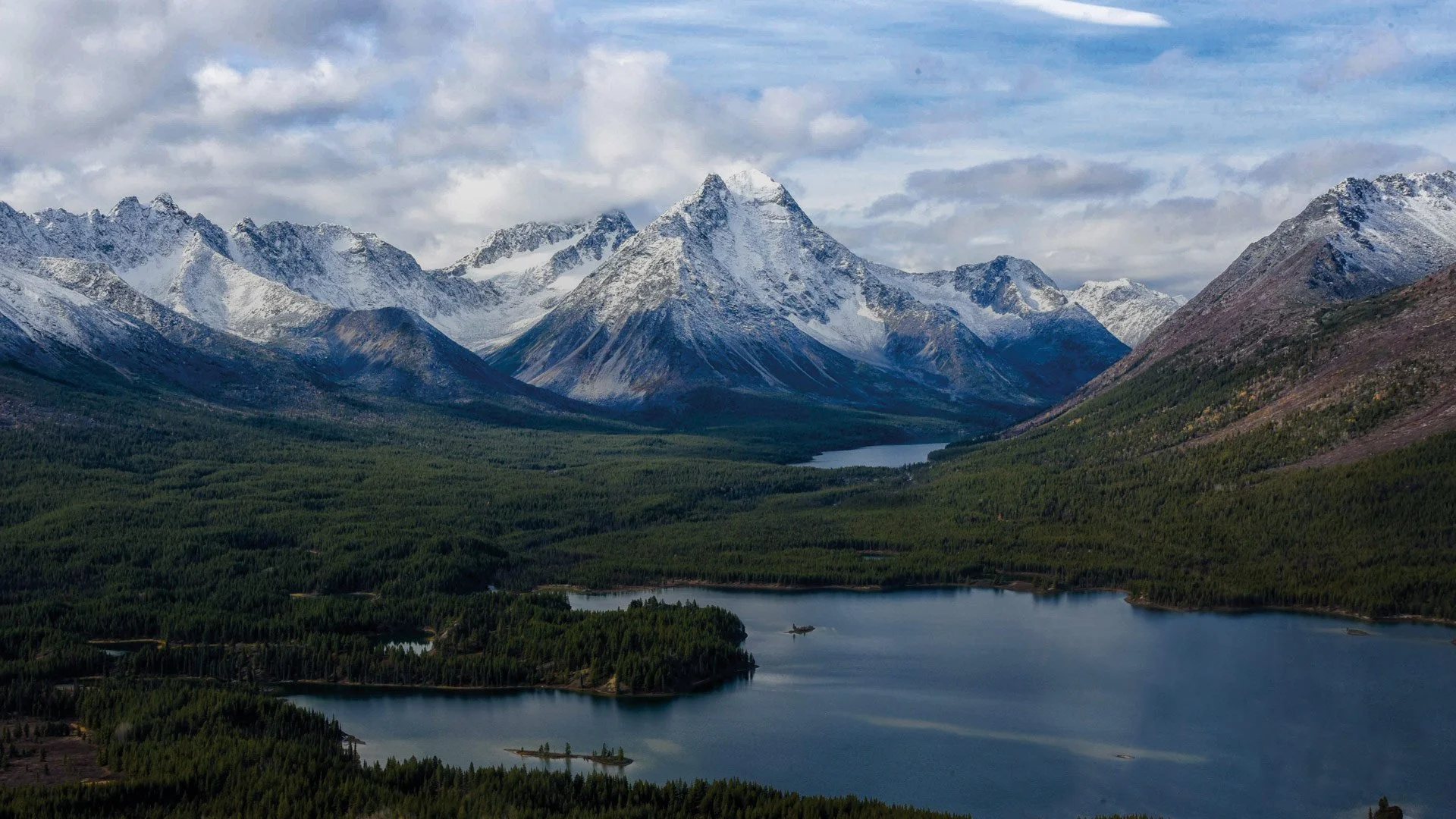
Indigenous Protected and Conserved Areas.
Credit: Dena Kayeh Institute
What recreation groups should know
Indigenous Protected and Conserved Areas, or IPCAs, are Indigenous-led initiatives that express a First Nation’s vision for protecting and stewarding lands and waters within its territory.
Each IPCA is defined by the Nation leading it and may reflect Indigenous laws, knowledge, governance, cultural responsibilities, conservation priorities and economic interests.
For recreation organizations, an IPCA declaration may raise questions about access, permitted activities, future land-use decisions and opportunities to participate.
An IPCA declaration does not automatically close an area or change existing provincial laws, tenures or permitted activities. However, it may lead to further planning, agreements or management decisions that affect where and how recreation takes place.
Watch: Dene K’éh Kusān, IPCAs and outdoor recreation
In this ORCBC webinar, representatives from the Dena Kayeh Institute share the Kaska Dene’s vision for Dene K’éh Kusān, a proposed Indigenous Protected and Conserved Area covering approximately 40,000 square kilometres in northern B.C.
The discussion explores how the proposal brings together Indigenous-led conservation, Kaska stewardship, outdoor recreation and modernized land use planning. It also offers a practical example of how an IPCA may support compatible activities such as hunting, fishing, paddling, hiking, skiing and motorized recreation while protecting important ecological and cultural values.
The webinar also explains:
how an Indigenous-led IPCA proposal may be advanced with the Province;
how the surrounding land use plans are being modernized;
how existing and future recreation may be considered;
the role of shared stewardship and co-management; and
why recreation groups should become involved early in planning processes.
The webinar features representatives and technical advisers from the Dena Kayeh Institute, along with the Province of British Columbia. A summary and resources are available here.
How are IPCAs different?
IPCAs are not all the same and are not simply the Indigenous equivalent of provincial or national parks.
Some may focus primarily on conservation, while others may also support cultural activities, harvesting, tourism, recreation, economic development or other uses that align with the Nation’s vision.
Their governance and management may be guided by Indigenous laws, knowledge and community priorities, and may evolve over time.
Similar initiatives may also be called Tribal Parks, Indigenous and Community Conserved Areas, Indigenous-led area-based conservation or Indigenous stewardship areas.
From declaration to implementation
An IPCA declaration and its implementation under provincial law are not the same thing.
A First Nation may declare an IPCA independently. The Nation and Province may then enter government-to-government discussions to identify shared goals and consider how the Nation’s vision could be advanced.
Implementation could involve:
modernized land-use planning;
government-to-government agreements;
provincial legal objectives;
protected or conserved-area designations;
shared stewardship arrangements;
operational management measures; or
Indigenous and provincial laws.
An IPCA declaration does not automatically change provincial laws, access, tenures or permitted activities. Changes may occur later if new provincial or jointly developed direction is adopted.
Does an IPCA declaration change access?
Not automatically. The declaration itself does not immediately change provincial laws, existing tenures, public access or permitted activities.
Recreation access may continue as before unless new legal objectives, designations, agreements or management measures are introduced.
However, a declaration may begin discussions between the First Nation and the Province about how the Nation’s vision should be recognized and implemented. Access or recreation activities could therefore be affected by later decisions, even if nothing changes when the IPCA is first declared.
Could recreation activities change later?
Yes. Future planning or management decisions may affect:
access roads and bridges;
trails and recreation sites;
hunting and fishing access;
boating and shoreline access;
motorized and non-motorized recreation;
seasonal use;
camping;
visitor numbers;
sensitive cultural or ecological areas; and
where particular activities may occur.
Changes could include new protections, seasonal restrictions, route changes, permits, visitor education, restoration measures or other management approaches.
Restrictions are not inevitable. Many IPCAs may support compatible recreation, depending on the Nation’s vision, the values of the area and the management direction established.
How IPCAs relate to 30 by 30
Canada and British Columbia have committed to conserving at least 30% of lands and waters by 2030.
IPCAs can contribute to this target where they are formally recognized and meet the requirements for a protected or conserved area. An IPCA declaration does not automatically mean the area is counted toward 30 by 30.
Thirty by 30 is the conservation goal. IPCAs are one possible Indigenous-led way of helping achieve it.
Modernized land-use planning, government-to-government agreements and other legal or management tools may be used to put the conservation vision into effect.
As governments work toward the target, recreation groups may see more proposals for protected and conserved areas. Early involvement can help ensure that recreation use, access, stewardship and opportunities for compatible activities are understood before decisions are made.
When will recreation groups be engaged?
Where the Province and a First Nation consider changing legal land-use objectives or introducing new provincial direction, the Province has stated that affected communities, tenure holders, stakeholders and the public will be engaged. The form and timing of engagement will depend on the process.
Government-to-government planning reflects the Province’s responsibilities toward Indigenous rights and title. It does not remove the Province’s responsibility to understand and consider other public interests, including outdoor recreation, conservation, tourism, community access and local economic activity.
Recreation organizations should ask how their information will be gathered, how access and existing use will be considered, and how the Province will explain what it heard and how that input influenced the outcome.
Recreation groups should not wait for a formal consultation to begin. Early relationship-building and information-sharing can help ensure existing recreation use is understood before decisions are well developed.
Watch for:
IPCA announcements;
land-use planning processes;
community meetings;
proposed conservation designations;
changes to legal land-use objectives; and
management planning or implementation processes.
What recreation groups can do
An IPCA declaration is a reason to learn more, not to assume the outcome.
Recreation organizations can:
read the Nation’s declaration or stewardship vision;
identify who is leading the process for the Nation and Province;
ask whether provincial planning or legal changes are expected;
share information about existing access, recreation and stewardship;
raise concerns about access or displacement early;
identify activities that may be compatible with the Nation’s objectives;
build relationships before formal consultation begins; and
participate in any planning or implementation process that follows.
The goal should be to understand the Nation’s vision while clearly and respectfully explaining how people currently use and care for the area.
For more detailed guidance on mapping recreation values and preparing input, see ORCBC’s Modernized land use planning resource.
What recreation groups should focus on
For recreation groups, the key question is not only whether recreation may continue, but how it fits with the Nation’s stewardship vision and any future management direction.
Groups should be ready to:
explain current recreation use and access;
identify activities that may be compatible with the IPCA’s objectives;
raise concerns about displacement or unintended effects;
understand where cultural or ecological sensitivities may require changes; and
explore opportunities for stewardship, monitoring or education.
For detailed guidance on mapping access, documenting recreation values and preparing input, see ORCBC’s Modernized land use planning resource.
Working respectfully with First Nations
Provincial engagement is not a substitute for building a relationship with the First Nation leading the IPCA.
Recreation organizations should:
learn whose territory they are operating in;
approach the Nation early and respectfully;
listen before presenting preferred outcomes;
recognize Indigenous rights, laws and governance;
avoid assuming that provincial authorization represents Indigenous support;
respect the Nation’s timelines and capacity; and
look for areas of common ground.
Before sharing maps, consider whether they identify culturally or ecologically sensitive locations. Ask the Nation or planning team how sensitive information should be handled.
See ORCBC’s Working with Indigenous communities resources for more detailed guidance.
Questions recreation groups can ask
What area is included in the IPCA?
What stewardship and conservation goals has the Nation identified?
Are any changes to recreation or access being considered?
How will the Province consider and report back on recreation and broader public input?
Is a provincial planning or legal process expected?
When and how will recreation groups be able to participate?
Which activities may be compatible with the Nation’s vision?
Are there areas where recreation impacts are a concern?
What information would be useful from recreation organizations?
Are there opportunities for shared stewardship or monitoring?
Who should recreation groups contact?
Resources
IPCA Knowledge Basket: A national collection of free resources, stories, planning tools and examples related to IPCAs and Indigenous-led conservation. It includes material on IPCA planning and establishment, governance, Indigenous laws, stewardship, financing and relationships with supporters and allies.
Indigenous Protected and Conserved Areas: A provincial fact sheet explaining IPCA declarations, provincial recognition, existing land uses and public engagement.
ORCBC resources
Working with Indigenous communities: Guidance and resources for building respectful relationships with Indigenous Nations.
Modernized land use planning: Practical information for recreation groups participating in land use planning.
Examples from BC
Gwaxdlala/Nalaxdlala Indigenous Protected and Conserved Area: A B.C. example from the Mamalilikulla First Nation showing how one Nation has defined and advanced its own IPCA. The Nation declared the area in Knight Inlet in 2021 and describes its goals for collaborative governance and stewardship.
Tla-o-qui-aht Tribal Parks: A long-standing Tribal Parks system in Clayoquot Sound that combines Indigenous governance, conservation, guardians, recreation, visitor education and partnerships with local businesses.
Dene K’éh Kusān: A large proposed IPCA in northern B.C. that illustrates how Indigenous-led conservation may connect with modernized land-use planning, recreation and regional stewardship.
Provincial planning
Modernizing land use planning in British Columbia: Information about provincial land use planning and active planning processes.
How ORCBC can help
ORCBC can support recreation organizations by:
explaining how IPCAs may connect to provincial planning processes;
helping groups identify recreation and access concerns;
connecting organizations working in the same region;
reviewing draft submissions;
supporting coordinated input;
sharing Indigenous relations resources; and
raising broader recreation concerns with the Province.
Strengthen recreation’s voice
Land use plans can shape access, conservation and recreation for decades.
By becoming an ORCBC member, your organization helps ensure outdoor recreation is represented in decisions about B.C.’s lands and waters.
Become an organizational member
Groups can also subscribe to ORCBC’s newsletter for updates on selected planning and land-use opportunities that may affect outdoor recreation.