
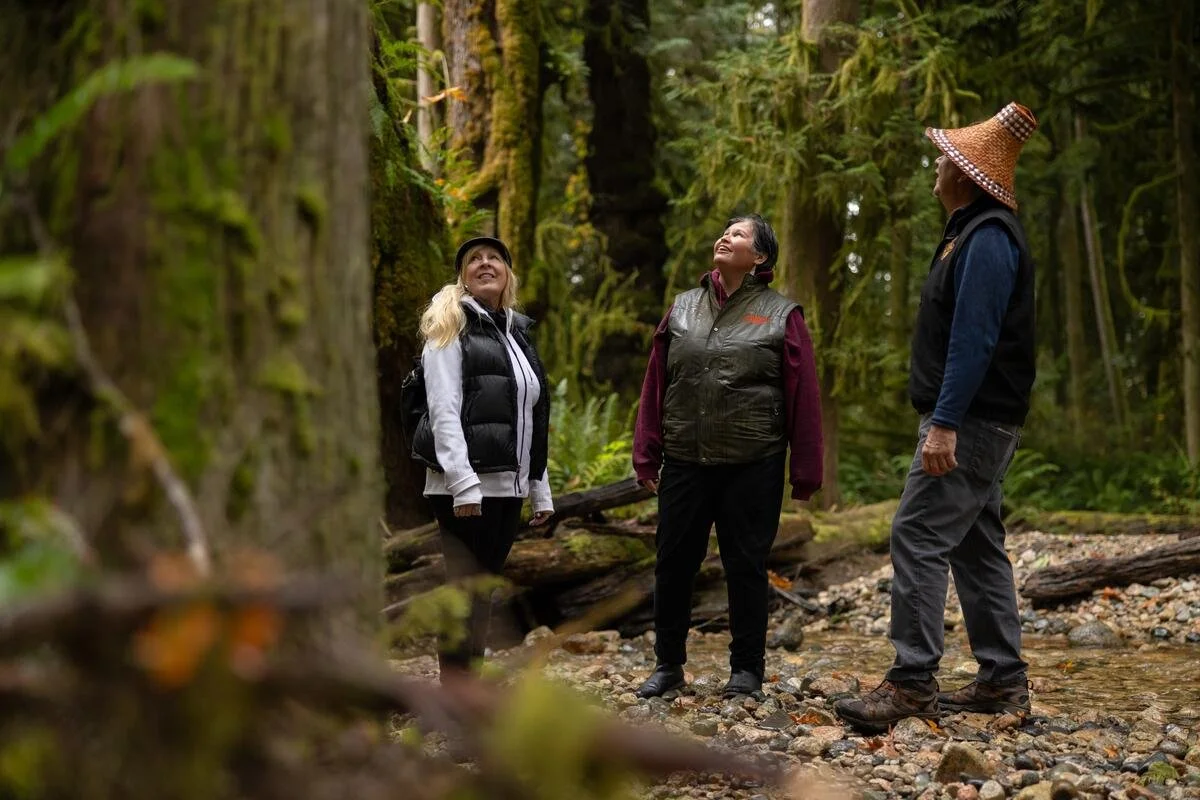
Working with Indigenous communities.
Image: Talaysay Tours
Outdoor recreation in B.C. takes place on the lands and waters of Indigenous Peoples.
Recreation organizations have a responsibility to understand whose territories they are working in, respect Indigenous rights and interests, and build relationships based on listening, trust and mutual benefit.
Every Nation, community and relationship is different. There is no single checklist for doing this work well, but there are practical steps every organization can take to begin.
Start here
Guidance Toolkit for Engagement with Indigenous Communities
Not sure how to begin a conversation with an Indigenous community? This toolkit is a practical starting point.
It helps outdoor recreation groups approach relationship-building in a respectful, thoughtful and informed way. It includes guidance on preparing before reaching out, making initial contact, listening to community priorities and building relationships over time.
Use the toolkit to help your organization:
Understand the context before reaching out
Identify the appropriate Indigenous communities
Prepare for respectful conversations
Communicate clearly about your organization and proposed work
Listen to and respond to community interests and concerns
Build relationships that extend beyond a single project or request
Take a look at the Engagement Toolkit and the Citizen-based Reconciliation framework.
Four places to begin
1. Learn whose territory you are in
Before beginning a project or reaching out to a community, take time to understand the Indigenous Nations connected to the lands and waters where your organization works.
Maps can provide a useful starting point, but they do not replace information provided directly by Indigenous Nations.
You may also want to learn about:
The Nation’s history, governance and current priorities
Indigenous place names
Cultural and archaeological values
Existing stewardship or land-use plans
Agreements or protocols that may apply
Previous relationships with recreation groups or land managers
Useful starting points include the First Peoples’ Map of B.C., the B.C. Assembly of First Nations community map and local Indigenous Nation websites.
2. Reach out early
Do not wait until your plans are complete before making contact.
Relationships are stronger when Indigenous communities have a meaningful opportunity to help shape a project from the beginning. Introduce your organization, explain what you are considering and ask how the Nation would prefer to be involved.
Be clear about:
Who you are
What your organization does
What you are proposing
Where the project or activity would take place
What decisions have already been made
What remains open for discussion
Your timelines and funding constraints
What you are asking of the community
Avoid sending a finished proposal and asking for approval. Early conversations can help identify concerns, opportunities and better approaches before your plans are finalized.
3. Listen and be prepared to change course
Engagement is not simply about gaining support for a plan your organization has already developed.
A Nation may identify cultural, environmental, access or governance considerations that your organization had not understood. The project may need to change, move more slowly or take a different direction.
Approach conversations with curiosity. Ask questions, listen carefully and avoid becoming defensive when concerns are raised.
Respectful engagement may sometimes mean:
Changing a trail alignment
Avoiding a culturally sensitive area
Adjusting the timing of an activity
Adding cultural interpretation
Creating employment or contracting opportunities
Supporting Indigenous stewardship priorities
Pausing or reconsidering a project
4. Build a relationship, not a transaction
A respectful relationship should not end when a permit is issued, a trail is built or a funding application is submitted.
Stay in contact. Share updates. Follow through on commitments. Ask how your organization can support community priorities and look for opportunities to work together beyond a single project.
Trust develops through consistent actions over time.
What can working together look like?
There is no single model. The right approach depends on the Nation, the place and the project.
Relationships may include:
Indigenous leadership in recreation planning
Shared stewardship of trails and recreation areas
Cultural interpretation and Indigenous place names
Employment and contracting opportunities
Youth programs and training
Monitoring and restoration projects
Agreements that clarify responsibilities and decision-making
Changes to routes or activities to protect cultural and ecological values
Indigenous-led recreation, tourism and conservation initiatives
The approach should be developed together.
More tools and guidance
-
This guide offers additional context and practical advice for recreation organizations working with Indigenous communities on trails, recreation facilities and other outdoor projects.
It explores how organizations can begin relationships, prepare for conversations and move from one-time engagement toward longer-term collaboration.
-
Planning a trail or recreation facility on Crown land?
ORCBC’s Section 56 and 57 resources include guidance on early engagement with Indigenous Nations and other steps recreation groups should consider before submitting an application.
-
The Squamish Off-Road Cycling Association and Squamish Nation developed a memorandum of understanding recognizing shared interests and stewardship responsibilities within Sḵwx̱wú7mesh territory.
-
The Shuswap Trail Alliance has worked with Secwépemc partners to bring Indigenous place names, stories and knowledge into the regional trail system.
-
The collaborative table includes twenty-three First Nations, commercial and recreational fishers that are promoting collaboration and civil dialogue. Read more about it here.
The Lower Fraser Fisheries Alliance is a voice of the First Nations of the Lower Fraser River. You can read more about it here.
-
The Indigenous Youth Mountain Bike Program works with First Nations to support trail development, youth leadership and stronger connections to land.
-
Learn about Indigenous Peoples and communities
Indigenous rights and reconciliation
Indigenous-led conservation
Indigenous Protected and Conserved Areas are lands and waters where Indigenous governments have the primary role in protecting ecosystems through Indigenous laws, knowledge and governance.
ORCBC’s role
ORCBC supports the outdoor recreation sector in building more respectful relationships with Indigenous Peoples.
Our work includes:
Developing practical resources for recreation organizations
Sharing learning and examples from across the sector
Hosting educational webinars and conversations
Supporting recreation groups as they navigate engagement
Advancing reconciliation through our programs, partnerships and organizational decisions
We recognize that this is ongoing work. We will continue learning, listening and adapting our approach.
Start with one step
You do not need to have every answer before beginning.
Start by learning whose territory you are in. Take time to understand the community. Reach out early, listen carefully and follow through on what you say you will do.
Respectful relationships are built over time.