
B.C. budget committee calls for stronger, more predictable outdoor recreation funding
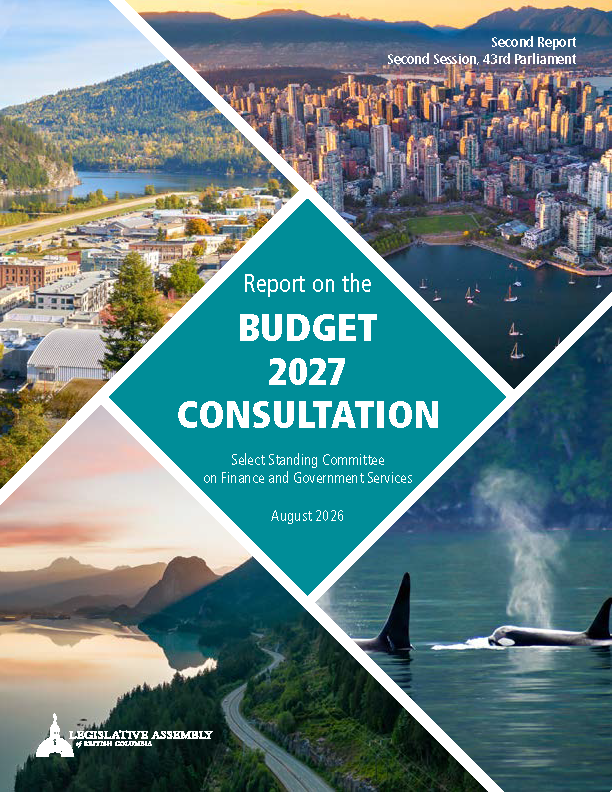
Outdoor recreation received some welcome attention in the Legislature’s newly released Report on the Budget 2027 Consultation.
The report is not the provincial budget itself. It reflects what the Select Standing Committee on Finance and Government Services heard from British Columbians during this year’s budget consultation and the recommendations the Committee is now making to government.
For the outdoor recreation community, two recommendations stand out.
The Committee recommends that the Province:
“Review and strengthen British Columbia’s parks and recreation funding model to provide predictable, dedicated funding that supports sector organizations and infrastructure, aligned with tourism priorities.”
It also recommends:
“Provide dedicated funding to assess and protect high-value recreation access roads prior to deactivation where recreation, tourism, emergency access, or community value remains.”
A broader recognition of what outdoor recreation needs
The recommendations follow a substantial section of the report focused specifically on parks and outdoor recreation.
The Committee heard calls for increased investment in BC Parks to address deferred maintenance, infrastructure, staffing and the management of new protected areas. It also heard strong support for stable, multi-year funding for both BC Parks and Recreation Sites and Trails BC, recognizing the role these systems play in tourism, rural economies, community livability, health and access to the outdoors.
The report also recognizes that funding needs to extend beyond government agencies and physical infrastructure.
Committee members specifically identified the need for sustainable funding for provincial not-for-profit parks and recreation organizations and volunteer-led trail management, alongside funding for BC Parks, Recreation Sites and Trails BC and recreation infrastructure.
That matters because much of B.C.’s outdoor recreation system depends on community organizations and thousands of volunteers who build and maintain trails, steward recreation sites, organize programs and help keep outdoor spaces accessible.
The Outdoor Recreation Fund of BC
The report also highlights the significant unmet demand facing the Outdoor Recreation Fund of BC.
ORCBC administers the Fund, which was established with a $10 million provincial endowment in 2023 to provide long-term support for community-based outdoor recreation projects across B.C. While the Fund is closely connected to ORCBC, its grants support organizations and projects throughout the province’s outdoor recreation sector.
ORCBC and the Federation of Mountain Clubs of BC told the Committee that only about 15 percent of grant requests are currently funded and that the Fund does not provide core operational support.
The report notes that additional investment, including support for operating costs, could help community-based, volunteer-led and Indigenous-led organizations retain capacity and sustain recreation infrastructure and programming over the long term.
Recreation access roads recognized as a provincial issue
We are particularly encouraged to see recreation access roads receive their own recommendation.
Across B.C., former resource and industry roads provide access to trails, lakes, rivers, backcountry destinations and recreation sites. When industrial use ends, however, there is often no consistent process for determining which roads continue to have important public value.
The Committee heard that early planning and targeted maintenance can improve safety, extend the life of roads and avoid more expensive repairs later. It concluded that dedicated funding is needed to assess and protect high-value recreation access routes before they are deactivated.
This closely reflects what ORCBC has been hearing from recreation organizations and communities across the province.
Active transportation is part of the picture too
The report also points to active transportation as an important part of B.C.’s recreation and tourism infrastructure.
Participants called for renewed and more predictable investment in active transportation, including in rural and remote communities, where safe walking and cycling connections can improve access to destinations and support community connectivity. The report also notes the role of active transportation in supporting destination access as part of the province’s Outdoor Recreation Strategy and Tourism Sector Action Plan.
Elsewhere, the Committee notes that investments in active transportation infrastructure and trails can improve access to tourism destinations and enhance visitor experiences.
For ORCBC, this is relevant because recreation access is not only about backcountry roads and trails. It also includes the connections that help people reach outdoor spaces safely and link communities, trail networks and tourism destinations.
A strong signal heading into Budget 2027
The Committee also explicitly connected recreation investment with implementation of B.C.’s Outdoor Recreation Strategy and the province’s tourism priorities.
Its discussion calls for dedicated funding to implement the Strategy and identifies BC Parks, Recreation Sites and Trails BC, recreation infrastructure, sector organizations and volunteer-led trail management as areas that need sustainable support.
There is still an important next step: these are recommendations to government, not funding commitments; however, the report sends a clear signal.
B.C.’s outdoor recreation system needs more than short-term and project-by-project funding. It needs predictable investment in the agencies, organizations, infrastructure and access routes that make outdoor recreation possible.
ORCBC will continue to make that case as the Province develops Budget 2027.