
New provincial data shows outdoor recreation contributes $6.6 billion to B.C.’s economy
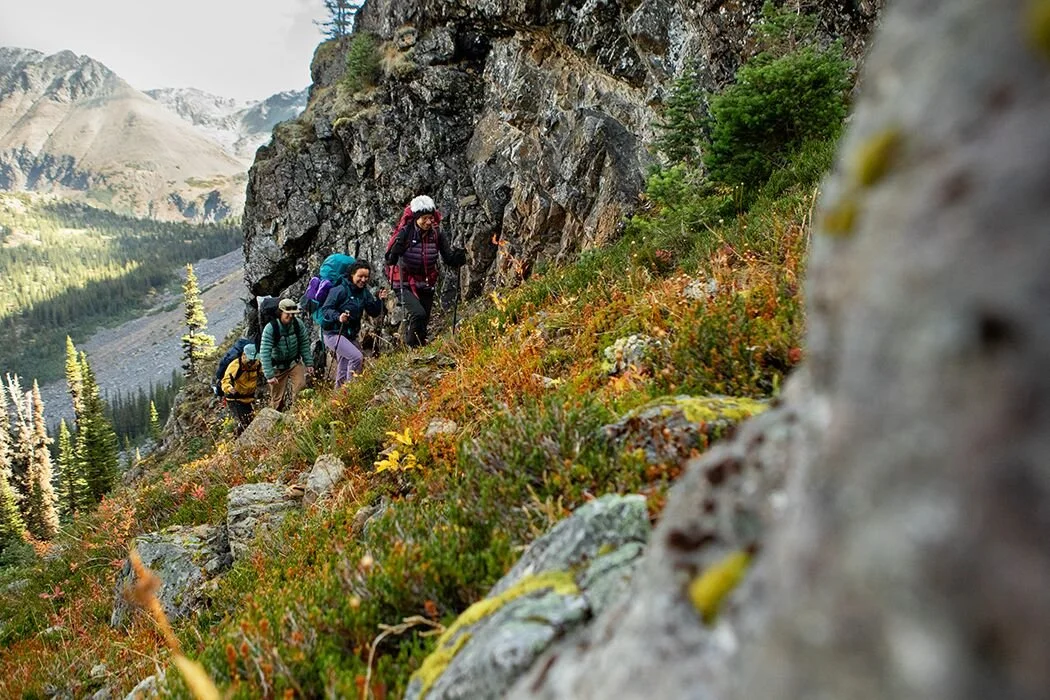
Image: Northern BC Tourism & Abby Cooper
ORCBC says Canada’s first provincial Outdoor Recreation Satellite Account strengthens the case for investment in access, recreation infrastructure and stewardship
New provincial data shows outdoor recreation contributed $6.6 billion in real GDP in British Columbia in 2024 and supported approximately 86,000 jobs.
The findings come from B.C.’s new Outdoor Recreation Satellite Account, developed by BC Stats with support from the Ministry of Environment and Parks and the Ministry of Jobs and Economic Growth.
Because outdoor recreation spans many industries, its economic contribution can be hard to capture in traditional economic statistics. The new account brings that activity together to show the outdoor recreation economy as a whole.
“These numbers put outdoor recreation firmly on the economic map in British Columbia,” said Louise Pedersen, executive director of the Outdoor Recreation Council of BC. “At $6.6 billion in real GDP, outdoor recreation is on the same economic scale as sectors such as tourism, oil and gas extraction, and mining.”
What the new account measures
The account captures economic activity across four main areas: outdoor recreation experiences, goods, government spending and investment in recreation-related infrastructure.
It is the first provincial account of its kind in Canada and is designed to be updated annually, giving B.C. a consistent way to track how the outdoor recreation economy changes over time.
“Outdoor recreation is truly a way of life for people in B.C.,” said Tamara Davidson, Minister of Environment and Parks. “The Outdoor Recreation Satellite Account, part of our Outdoor Recreation Strategy, helps us make informed decisions across government and with our partners so that we can support people and the places they love.”
Why the data matters
Annual updates will help show whether the sector is growing, how it is changing and where investment, policy changes, business supports and grants for community organizations could help strengthen it.
“This isn’t just an interesting number,” Pedersen said. “It gives governments, communities and organizations a much stronger evidence base for decisions about economic development, land use, access and investment.”
ORCBC has been calling for better provincial outdoor recreation data for several years. In 2021, we developed a research proposal identifying gaps in economic and non-economic data.
What we want to see next
For ORCBC, one of the clearest implications is the need to support the infrastructure, access, agencies, organizations and people that make outdoor recreation possible, including BC Parks, Recreation Sites and Trails BC, community groups and volunteers.
“A $6.6-billion outdoor recreation economy doesn’t exist without the trails, parks, recreation sites, lakes, rivers, access roads, huts and other places and infrastructure people rely on,” Pedersen said. “If outdoor recreation is this important to B.C.’s economy, we need to make sure we’re investing in the places and systems that support it.”
That is especially relevant in rural and regional communities, where outdoor recreation can support tourism, local businesses, workforce attraction and economic diversification.
Outdoor recreation also supports B.C. businesses
Apparel, goods and accessories associated with outdoor recreation contributed approximately $1.2 billion in real GDP and supported more than 17,000 jobs in 2024.
“I commend the Province for developing the Outdoor Recreation Satellite Account,” said Peter Hlynsky, CEO of MEC. “As a B.C.-based company and outdoor retailer, MEC has deep roots in this province and a long-standing connection to the people and places that make outdoor recreation here so special. Through our staff and members, we have a front-row seat to how British Columbians recreate and have watched that passion grow year after year. This data demonstrates a powerful economic incentive to continue supporting outdoor recreation and reinforces why continued investment in access and protecting these places matters.”
What others are saying
Adrian Dix, acting Minister of Jobs and Economic Growth
Outdoor recreation is an important driver of economic activity in communities throughout British Columbia, but until now we have not had a clear and consistent way to measure its full impact.
Diana Gibson, Minister of Citizens’ Services
“This data initiative is a first for B.C. and Canada. Capturing spending data on outdoor recreation means we can better support the people who love the great outdoors, as well as the sector and the provincial economy.”
Kenny Ballard, president of Mustang Survival
“Outdoor recreation is central to British Columbia’s identity and, as this new data confirms, a powerful contributor to our economy. At Mustang Survival, we see how access to healthy waterways and well-maintained outdoor spaces enables people to explore with confidence and return home safely. Sustained investment in recreation infrastructure, responsible access and environmental stewardship will help protect these places while ensuring communities and businesses across the province continue to benefit.”
Powder Matt Mosteller, board chair and co-founder, KORE Outdoors
“Outdoor recreation has always been a vital part of life for British Columbians, and this new data shows just how important it is to B.C.’s economy. The outdoor recreation economy powers main street businesses across B.C. and helps build healthier, stronger communities.”
Want to dig into the numbers yourself?
Download the detailed Outdoor Recreation Satellite Account spreadsheet
View the full Outdoor Recreation Satellite Account data and methodology (Ministry of Environment and Parks)
View B.C.’s outdoor recreation economic indicators (Ministry of Jobs and Economic Growth)
One thing to keep in mind when looking at the detailed activity tables: the figure attached to an individual activity may not represent all spending associated with taking part in that activity. Some trip- and activity-related spending may be captured in other parts of the account.
Frequently asked questions
-
The Outdoor Recreation Satellite Account, or ORSA, is a new way of measuring the economic contribution of outdoor recreation in B.C.
Outdoor recreation cuts across many industries, including tourism, retail, transportation, manufacturing, recreation services, government and infrastructure. That has made it difficult to see the sector as a whole in traditional economic statistics.
The ORSA brings that activity together in one account and measures things such as GDP, jobs, labour income and tax revenues.
The Province’s Outdoor Recreation Strategy calls for the account to be published annually so B.C. can consistently measure and track the economic value of outdoor recreation over time.
-
The account was developed by BC Stats, with support from the Ministry of Environment and Parks and the Ministry of Jobs and Economic Growth.
It draws primarily on Statistics Canada data, including supply and use tables, travel surveys, household spending and capital investment data, as well as government administrative data and input from B.C. businesses and organizations.
The methodology is based on Statistics Canada classifications and informed by the U.S. Outdoor Recreation Satellite Account, which provides a framework for identifying and organizing economic activity associated with outdoor recreation.
-
For 2024, outdoor recreation contributed approximately:
$6.6 billion in real GDP
86,000 jobs
$4.4 billion in labour income
Nearly $3 billion in federal, provincial and municipal tax revenues
-
GDP measures the value added to the economy through the production of goods and services.
“Real” GDP adjusts for changes in prices, which makes the number more useful for comparing economic activity over time.
-
Outdoor recreation is not one traditional industry.
A hiking trip, for example, can involve activity across transportation, accommodation, retail, food services, recreation services and other industries. A ski business, outdoor retailer and trail-building contractor may all be part of the outdoor recreation economy but appear in different parts of conventional economic statistics.
The ORSA is intended to bring those pieces together.
-
The account groups economic activity into four broad areas:
Outdoor recreation experiences: Activity-related services and spending.
Goods: Equipment, apparel and other products associated with outdoor recreation.
Government spending: Government operations and services connected to outdoor recreation.
Infrastructure investment: Investment in recreation-related infrastructure.
-
This is important when looking at the detailed spreadsheet.
The number attached to an individual activity should not necessarily be interpreted as the total economic impact of everyone who participates in that activity.
Someone going fishing, hiking, paddling or mountain biking may also spend money on accommodation, fuel, food, equipment, transportation or other services. Some of that trip- and activity-related spending may be recorded in other parts of the account rather than attributed directly to the individual recreation activity.
As a result, an activity can have a relatively modest number in the activity table while still contributing to economic activity elsewhere in the ORSA.
-
No, the ORSA is an economic account, not a participation survey.
A very popular activity can generate relatively little direct spending per outing, while another activity with fewer participants may involve larger purchases, fees, rentals or commercial services.
The activity tables should therefore not be read as a ranking of which outdoor activities are most popular or most important.
-
The ORSA draws on broad economic and consumer-spending data, but not all trip-related spending is necessarily attributed directly to the recreation activity that motivated the trip.
For example, spending on fuel, accommodation or restaurants may appear elsewhere in the economic account rather than under a category such as fishing, hiking or paddling.
That is why individual activity figures need to be interpreted in the context of the broader account.
-
No. It measures economic activity, not every benefit outdoor recreation provides.
It does not fully capture things such as:
health and wellbeing
volunteer contributions
community connection
environmental benefits
quality of life
the value of simply having access to parks, trails, waterways and other outdoor places
The Province’s Outdoor Recreation Strategy separately identifies work to better understand health-related economic benefits, which shows that the ORSA is one part of a broader effort to understand the value of outdoor recreation.
-
For the first time, B.C. has a consistent provincial economic measure that can help put outdoor recreation into conversations about:
infrastructure and maintenance
access
land-use planning
community economic development
business growth
government funding
grants for community organizations
stewardship
-
Yes, but comparisons need to use the same economic measure and year.
The $6.6-billion figure is real GDP, so it should be compared with real GDP figures for other sectors rather than revenue, sales or total economic output.
That is why ORCBC has described outdoor recreation as being on a similar economic scale to sectors such as tourism, oil and gas extraction and mining rather than simply comparing unrelated headline numbers.
-
Yes, the provincial Outdoor Recreation Strategy calls for the ORSA results to be published annually.
That may ultimately be one of the most useful parts of the account. One year gives B.C. a baseline; annual updates can show how the sector changes over time.
-