
New toolkit makes it easier to host stewardship events
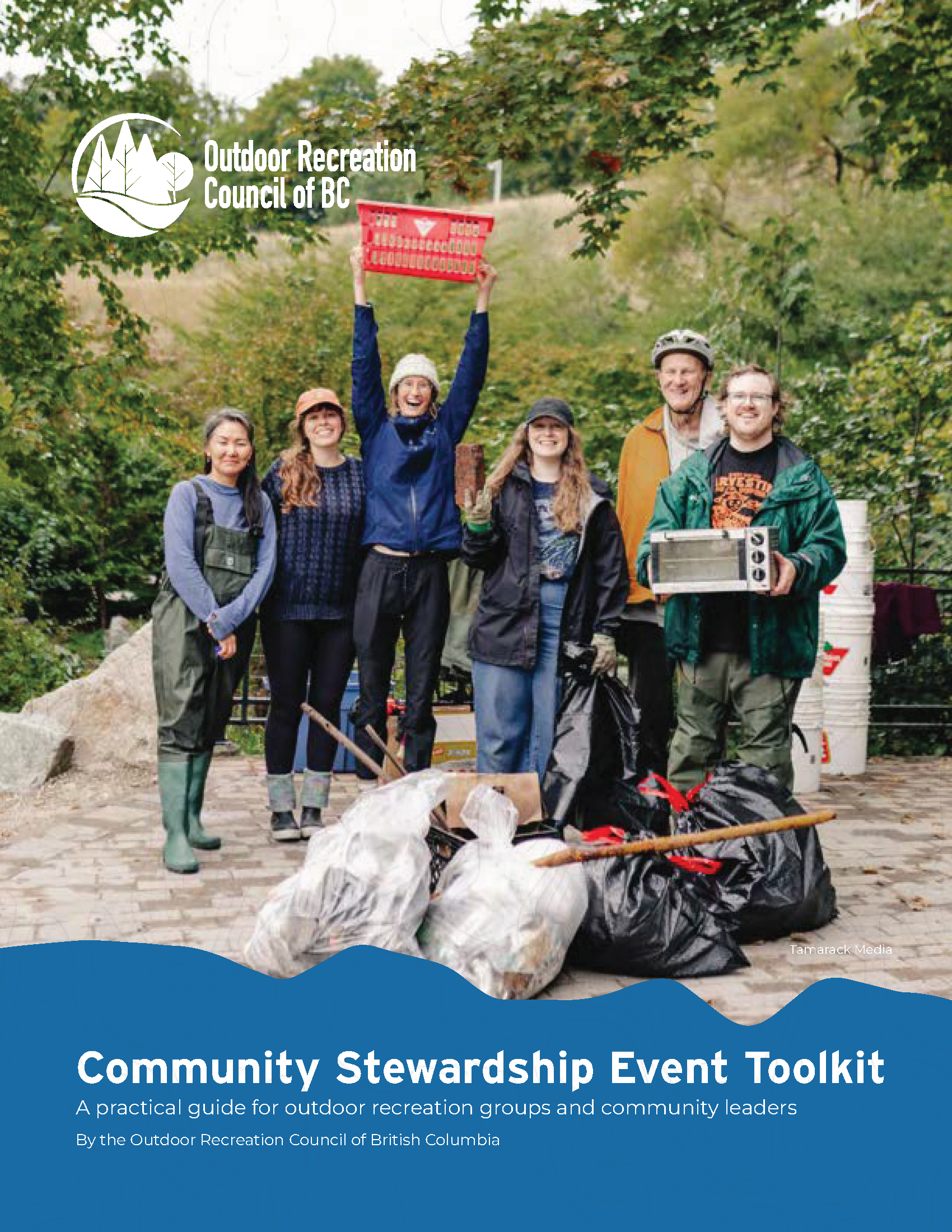
ORCBC’s Community Stewardship Event Toolkit gives recreation groups practical guidance for turning stewardship ideas into action
Add up extreme weather events, wildfires, urban encroachment and more people getting outside than ever before, and there is growing pressure on the places where British Columbians recreate. That’s why the Outdoor Recreation Council of BC (ORCBC) created a toolkit to help anyone plan a stewardship-related event.
“We believe stewardship is not separate from recreation - it is part of a healthy recreation culture,” says Ryan Stuart, Community Engagement Lead with ORCBC. “Organizing a stewardship-related event is one of the most accessible ways of having an impact and giving back to your local community.”
But easy does not necessarily mean intuitive. ORCBC’s new Community Stewardship Event Toolkit bridges the gap by providing inspiration for different types of events and step-by-step instructions for successfully organizing them.
“There are lots of ways outdoor recreation groups can help care for the places where they recreate,” Stuart says. “The challenge is often knowing what kind of event makes sense, who needs to be involved and what to think about before people show up with gloves and shovels.”
ORCBC is a province-wide charity and the collective voice for outdoor recreation in B.C. It brings recreation organizations, governments, First Nations, communities and partners together to improve public access and support responsible outdoor recreation. The council sees stewardship - the holistic and long-term management of natural spaces to conserve and restore healthy ecosystems - as integral to sustainable outdoor recreation in its many forms.
Outdoor recreation groups across B.C. are already involved in stewardship, from restoring habitat and reducing erosion to planting native species and helping reduce human-wildlife conflict. Many of those projects involve volunteers and community events. ORCBC created the toolkit to make those events easier to organize and to help more groups get involved.
The toolkit is broken into two parts. The first half focuses on aspects common to all stewardship events: health and safety, accessibility, communications, necessary permissions and permits, and building relationships with partners. It also includes guidance on building relationships with Indigenous communities, many of which are already leading or involved in stewardship work.
The second part looks at five types of stewardship events: clean-ups, habitat restoration, invasive species removal, native species planting and citizen science. Each section explains what the activity involves, what organizers should consider before getting started and what equipment may be needed. Examples from around B.C. show what stewardship can look like in practice.
The toolkit also encourages groups to look for opportunities to join work that is already underway. Conservation organizations, invasive species councils, First Nations, local governments, researchers and land managers are doing stewardship work in communities across the province.
“You don’t necessarily have to create something from scratch,” says Stuart. “Sometimes the most useful thing a recreation group can do is bring its volunteers, local knowledge and energy to an existing effort.”
Beyond building relationships in the community and contributing to healthy ecosystems, Ryan Stuart says stewardship events can also be good for the health of the organizations hosting them. They engage existing members in something constructive and can be a good way to bring in new volunteers and members.
The toolkit was developed with support from TD Friends of the Environment Foundation, FortisBC and the BC Parks Licence Plate Program, with research and writing support from Caitlin Lichimo.
“We hope this toolkit makes stewardship feel more doable,” says Stuart. “There are many ways to care for the places where we recreate, and you don’t have to start big to make a difference.”