
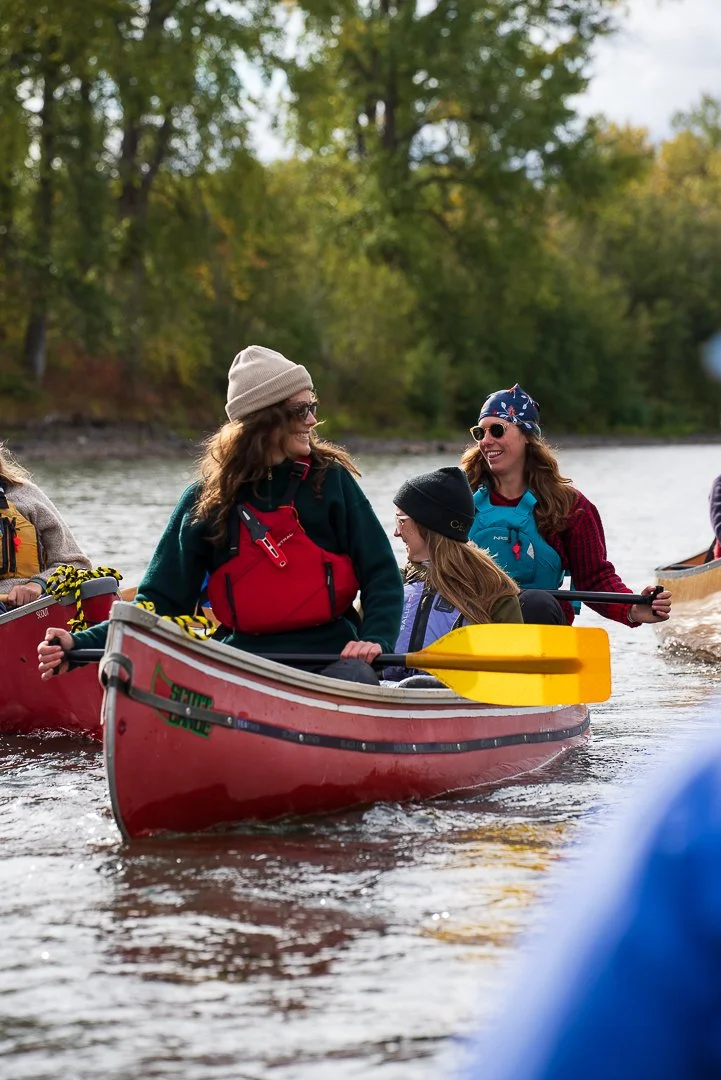
Image: Taylor Bachrach, Bulkley Valley.
What makes people choose to live in one community over another? For many, access to mountains, forests, lakes, trails and other outdoor recreation opportunities is an important part of that decision.
New research from the U.S. Department of Agriculture (USDA) suggests that communities with recreation-based economies are particularly well positioned to attract new residents. It's a trend that has important implications for British Columbia, where many rural communities are looking to diversify their economies, attract workers and retain younger residents.
Recreation-oriented communities are growing faster
The USDA's November 2026 report, Rural America at a Glance, compares population trends across rural counties based on their economic activity.
Between 2020 and 2025, recreation-dependent rural counties experienced the strongest population growth of all six economic categories examined.
Recreation-dependent counties: +3.5%
Counties without a dominant industry: +1.1%
Manufacturing-dependent counties: +0.9%
Government-dependent counties: +0.6%
Farming-dependent counties: −0.9%
Mining-dependent counties: −1.5%
Recreation-dependent counties also recorded the highest rate of net migration, at 5.4%. The arrival of new residents more than offset the natural population decline caused by deaths outnumbering births.
While the research does not establish outdoor recreation as the sole reason for this growth, the differences between communities with different economic bases are striking.
A familiar trend in British Columbia
The phenomenon is not new. Researchers call it amenity migration - people relocating to communities primarily because of their natural surroundings, recreation opportunities, local culture and quality of life rather than the availability of traditional employment.
In an earlier ORCBC backgrounder, Returning to Nature: How Amenity Migration Is Reshaping BC's Rural Landscape, we examined how communities such as Golden, Cumberland, Nelson, Whistler and those in the South Okanagan were attracting new residents through their natural and recreational assets.
These residents range from retirees to working professionals and entrepreneurs who can earn a living without being tied to a major urban centre.
More recent Canadian population data point to a similar trend. According to Statistics Canada, four of Canada's five fastest-growing small urban centres between 2016 and 2021 were resort destinations:
Squamish, B.C. – 21.8%
Wasaga Beach, Ontario – 20.3%
Canmore, Alberta – 14.3%
Collingwood, Ontario – 13.8%
Canada's overall population grew by 5.2% during the same period.
A 2024 Ipsos survey commissioned by ORCBC also found that 56% of British Columbians said access to trails and outdoor recreation amenities influenced their choice of where to live.
The economic benefits extend well beyond tourism
Outdoor recreation's economic contribution is often discussed in terms of visitor spending, tourism businesses and jobs. But attracting people to live in a community can generate a different set of economic benefits.
Unlike visitors, permanent residents spend money locally throughout the year. They buy groceries, use local services, renovate homes, start businesses and contribute to community organizations. Some bring professional skills, business connections and income earned outside the community.
ORCBC's earlier research also identified examples of newcomers becoming actively involved in conservation, trail development and outdoor recreation advocacy in communities such as Golden and Nelson.
For rural communities, quality outdoor recreation opportunities can help:
Attract and retain skilled workers and their families.
Encourage entrepreneurship and new business investment.
Create year-round demand for local goods and services.
Attract former residents back to their hometowns.
Diversify local economies and reduce reliance on a single industry.
Strengthen community organizations and volunteer networks.
Outdoor recreation does not need to replace forestry, mining, agriculture or other established industries. It can complement them and help make communities more economically resilient.
Managing the challenges of growth
Amenity migration also brings challenges. Communities such as Whistler, Canmore, Revelstoke and others have experienced significant housing affordability pressures, making it increasingly difficult for local workers and longtime residents to remain in their communities.
Growing populations can also put pressure on public services, natural areas, recreation infrastructure and the volunteers who maintain local trails.
Changes in population can bring different expectations around land use, resource development and community identity, creating tensions between newcomers and longtime residents.
These challenges were identified in B.C. research on amenity migration long before the pandemic.
The goal should not simply be to attract more people, but to build healthy, affordable and economically diverse communities while protecting the natural assets that make them desirable places to live.
Making outdoor recreation part of rural economic development
At ORCBC, we believe outdoor recreation deserves greater consideration in economic development, workforce attraction and community planning.
For many rural communities, the opportunity is not necessarily to build new trails or recreation facilities. It is to make better use of existing assets, maintain public access, support local recreation organizations and connect recreation opportunities with broader community and economic development goals.
This is the focus of ORCBC's ongoing work with Selkirk Innovates, including our Outdoor Recreation for Community and Economic Development guidebook and our Trails, Towns, Talent: Building BC's Rural Outdoor Economy initiative.
There is also an opportunity to strengthen the evidence base in B.C. Research similar to the USDA study could help us better understand how outdoor recreation influences population trends, workforce attraction, business development and economic resilience across the province.
For governments considering how to strengthen rural economies, investment in parks, trails, recreation sites and the resource roads that provide access to them should be part of the discussion. These assets support not only the visitor economy but also the people and businesses that choose to call rural B.C. home.
Further reading
USDA (2026): Rural America at a Glance, page 12.
Statistics Canada (2022): Canada tops G7 growth despite COVID.
ORCBC: Returning to Nature: How Amenity Migration Is Reshaping BC's Rural Landscape.
ORCBC and Selkirk Innovates: Outdoor Recreation for Community and Economic Development: A Guidebook for Rural British Columbia Communities.