
Access is a relationship: Working with private landowners in BC
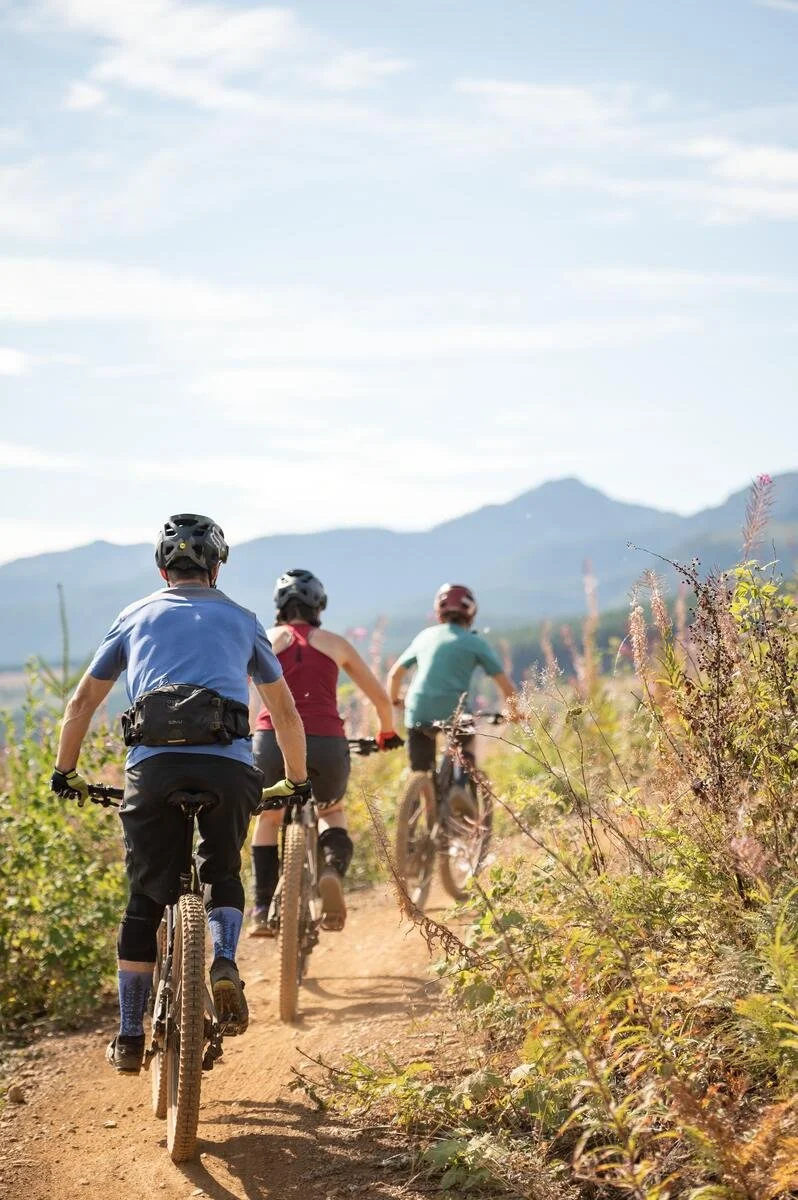
Image: Discover Comox Valley & Jarrett Lindal
Part of the series: Land access & stewardship in BC: What recreation groups need to know.
In British Columbia, most recreation groups are used to working on Crown land (see blog on Sections 56 and 57). But when it comes to building or maintaining trail networks, private land is often where things get more complex, and where relationships matter most.
While only a small portion of BC’s land base is privately owned, it’s frequently located near communities and often provides critical access to broader trail systems.
To support this work, the Outdoor Recreation Council of BC (ORCBC), in partnership with McElhanney, has developed a comprehensive resource: Best Practices for Developing Public Trails on Private Lands.
This blog builds on that guidance and lessons learned from recreation groups across BC.
Start with understanding, not assumptions
Unlike Crown land, access to private land is not a public right. Landowners can restrict access for any reason, and that decision must be respected.
Before approaching a landowner, it’s important to:
Confirm who owns the land
Understand how it’s classified and used
Consider the landowner’s responsibilities and constraints
For example, in many parts of BC, trails cross managed forest land, where landowners must consider harvesting, wildfire risk, and reforestation obligations. In agricultural areas, landowners may be concerned about livestock, crops, and biosecurity.
Relationships come before trails and access
Across BC, successful trail systems on private land are built on long-term relationships.
In Rossland, the Kootenay Columbia Trail Society spent years securing permission for existing trails on private land. Rather than pushing for access everywhere, they focused on landowners open to collaboration, which resulted in a strong, authorized trail network.
In Cumberland, the United Riders of Cumberland has worked with multiple private landowners, including forestry companies, and the municipality to formalize access across a complex patchwork of land ownership. That collaboration helped turn an informal network into a recognized community asset.
Get permission - in writing
Formal agreements are essential to protect both landowners and recreation groups.
Clear agreements should outline:
Trail locations and permitted uses
Maintenance responsibilities
Insurance requirements
Conditions for closure or termination
In Fernie, a misunderstanding about property boundaries and trail alignment led to conflict with a landowner and the loss of trail management on that parcel. In response, the Fernie Trails Alliance strengthened its agreements, mapping, and reporting systems to avoid similar issues.
Because agreements often involve legal obligations and risk allocation, it is worth seeking qualified legal advice when developing or reviewing them, particularly for more complex or long-term arrangements.
Understand liability and risk
Liability is one of the biggest concerns for private landowners, and often a key factor in whether access is granted.
Risk can be reduced by:
Following recognized trail standards
Maintaining trails and documenting inspections
Installing clear signage
Carrying appropriate insurance
In many cases, landowners require recreation groups to carry liability insurance and list them as additional insured parties as a condition of access.
Be clear about use and boundaries
Even with permission, access is rarely unlimited.
Landowners may:
Restrict certain uses (e.g., non-motorized only)
Require seasonal closures
Limit where users can go
Clear signage and communication help ensure users stay within agreed areas and avoid unintentional trespass.
In BC, unclear boundaries have led to conflict, reinforcing the importance of accurate mapping and on-the-ground clarity.
Maintain the relationship over time
Access should not be assumed to be permanent; it must be maintained.
Successful examples across BC show the importance of:
Regular communication with landowners
Sharing updates on maintenance, use, and incidents
Providing updated insurance documentation
Responding quickly to issues
In Cumberland, ongoing collaboration among the trail organization, municipality, community forest and landowners has enabled agreements to evolve and persist through changes in ownership and leadership.
Be flexible but stay committed
Trail systems that rely on private land require flexibility and long-term planning.
In Rossland, trail planners shifted away from parcels where access was unlikely and focused on areas where relationships could be built. This approach resulted in a more resilient and sustainable network over time.
Other groups have strengthened long-term access by:
Securing formal agreements or rights-of-way
Investing in mapping and asset tracking
Working with local governments to support planning
Final thoughts
Working with private landowners is essential for many trail projects in BC. Access is not guaranteed; it must be earned and maintained.
Done well, it can:
Enable key trail connections
Provide long-term certainty
Reduce risk for all parties
Done poorly, it can result in conflict and loss of access.
For groups working through agreements or liability questions, ORCBC members can access legal support, including short consultations with qualified professionals. Learn more here.