
Understanding Sections 56 and 57: What recreation groups need to know about trails on Crown land
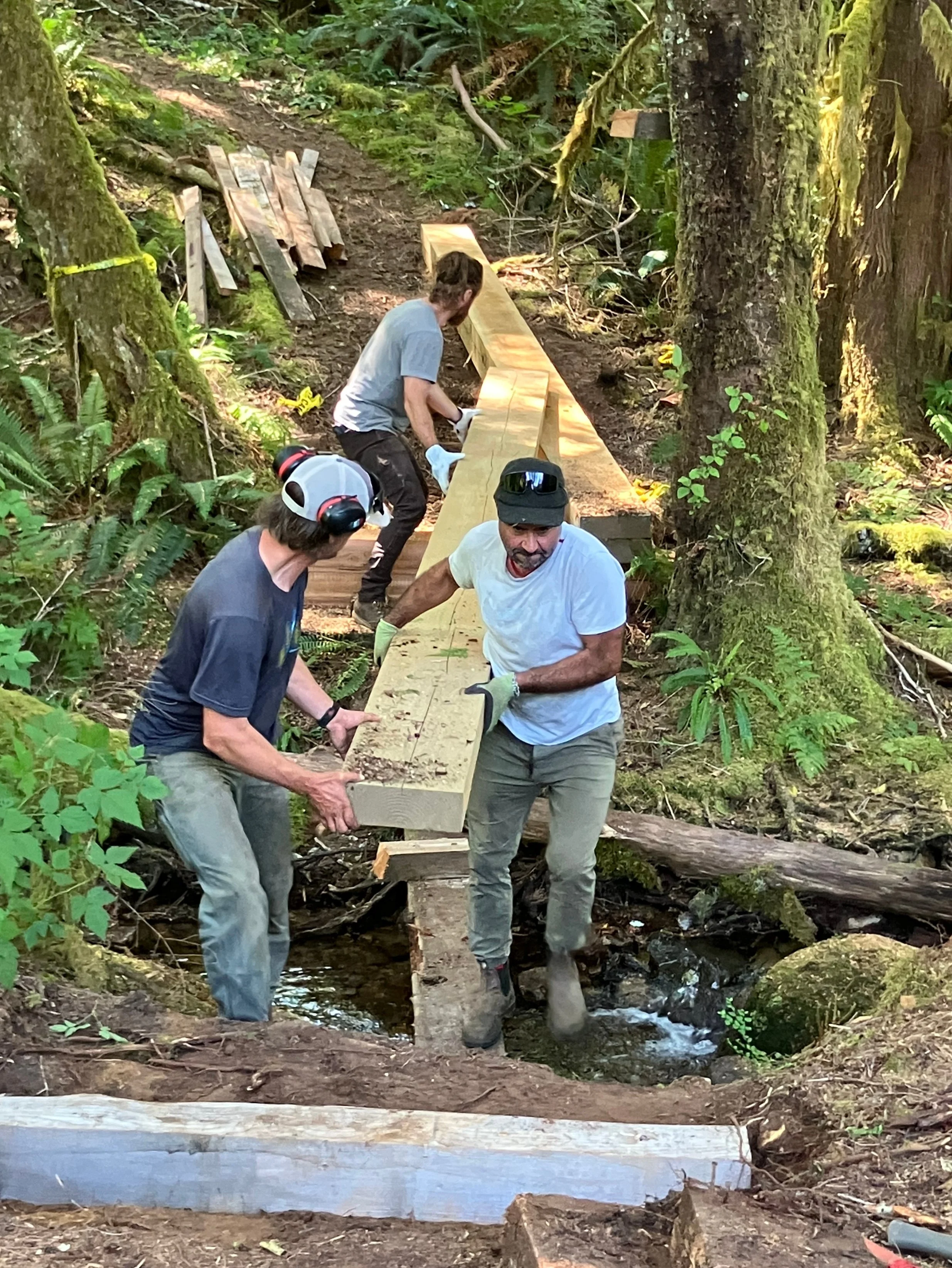
Image: Powell River Educational Services Society.
Part of the series: Land Access & Stewardship in BC: What Recreation Groups Need to Know.
Across British Columbia, outdoor recreation depends heavily on passionate volunteers and community organizations who care deeply about trails, access, and stewardship.
But many groups run into confusion, and sometimes conflict, when it comes to what work is legally allowed on Crown land.
Two sections of BC’s Forest and Range Practices Act (FRPA) come up again and again:
Section 56
Section 57
They sound technical, but they have very real implications for trail building, maintenance, and community stewardship.
Here’s a plain-language explanation of what they mean, and why it matters.
Section 56: About designation and planning
Section 56 gives the Province authority to formally establish recreation sites and recreation trails on Crown land.
In practical terms, this is how government can:
designate an area as an official recreation site or trail
change boundaries
remove a designation
set management objectives for those areas
Important clarification:
Recreation sites and trails under Section 56 are established through a ministerial decision made within government. This is an internal provincial process; there is no public “application” process for Section 56 designation.
Individuals or organizations cannot apply to establish a recreation site or trail under Section 56 in the way they can seek authorization for work under Section 57.
Recreation groups can express interest, share information, or work with Recreation Sites and Trails BC, but the decision to establish a site or trail ultimately rests with the Province.
This differs from Section 57, which allows individuals or organizations to request authorization to perform specific work.
When a trail or site is established under Section 56, it typically becomes part of the provincial recreation system, often managed through Recreation Sites and Trails BC.
Think of Section 56 as the planning and designation tool.
It answers questions like:
Is this an official recreation site or trail?
Who manages it?
What objectives apply here?
But Section 56 does not authorize people to start building or fixing trails.
That’s where Section 57 comes in.
Section 57: About doing physical work
Section 57 regulates the construction, rehabilitation, and maintenance of trails and recreation facilities on Crown land.
Here’s the key point - Section 57 is triggered by the activity, not by whether a trail is formally designated.
If someone is doing meaningful physical work on a trail or recreation facility on Crown land, Section 57 generally applies. This includes:
building new trails
reroutes or upgrades
bridges, boardwalks, platforms, jumps, campsites, or other structures
organized or structural maintenance
Under Section 57, a person or organization must have written authorization from the Minister (or delegate) before this work can occur.
In practice, these authorizations are administered by Recreation Sites and Trails BC, with applications submitted through FrontCounterBC.
You can think of Section 57 as a work authorization requirement for recreation infrastructure on Crown land.
Where is work legally allowed?
According to provincial policy, recreation trail and facility work may only occur in one of two situations:
On recreation sites or trails formally established under Section 56, or
On trails or facilities that have been explicitly authorized under Section 57.
This is important.
Even if a trail has existed for decades or was built by the community, work cannot proceed unless it fits one of these two categories.
Historic use does not equal permission.
What about basic volunteer maintenance?
The Forest Recreation Regulation allows very limited exemptions for low-impact activities, such as:
minor brushing
removing windfall by hand
basic clearing that does not change alignment, drainage, or trail structure
These exemptions are intentionally narrow.
Once work involves soil disturbance, construction, design changes, or structures, authorization is almost always required.
This is where many well-intentioned groups get caught out: stewardship becomes “construction” in the eyes of the law.
A common misconception
One of the most persistent myths is:“This trail isn’t officially designated, so Section 57 doesn’t apply.”
Unfortunately, that’s not true.
Section 57 applies based on what you are doing, not on whether the trail is designated.
Informal trails, legacy trails, and community-built trails are not exempt.
If you are improving, rebuilding, or developing recreation infrastructure on Crown land, you generally need Section 57 authorization.
How Sections 56 and 57 fit together
A simple way to think about it:
Section 56 = creates official recreation sites and trails
Section 57 = authorizes physical work on trails and recreation facilities
The Forest Recreation Regulation = defines what counts as work and what tiny activities are exempt
They overlap, but one does not depend on the other.
You can have Section 57 requirements on land that has never been designated under Section 56.
Best practices for recreation groups and volunteers
Understanding the legislation is only part of the picture. Strong trail stewardship also depends on good relationships, clear communication, and thoughtful project planning.
Here are some practical best practices for groups working on Crown land:
Start conversations early
Don’t wait until you have final designs or funding secured.
Engage Recreation Sites and Trails BC staff and local Indigenous Nations early, even at the idea stage. Early conversations help:
identify concerns before they become barriers
avoid investing time in projects that may not be supported
build shared understanding from the start
Do your homework
Before proposing work:
learn whose traditional territory you are on
understand local priorities and governance structures
review existing land-use plans or recreation objectives
Being prepared shows respect and helps move conversations forward productively
Build relationships, not just projects
Effective stewardship is relational, not transactional.
Successful groups focus first on relationship-building, and only then on trail outcomes. This includes:
listening more than talking
communicating consistently
following through on commitments
staying flexible while remaining engaged over time
Be clear about scope
When approaching land managers or Nations, clearly describe:
what work is proposed
why it’s needed
who will do it
how impacts will be managed
how volunteers will be supervised
Keep your organization and volunteers protected
Formal authorizations help ensure:
liability coverage
safety standards
clear accountability
long-term access security
Why this matters for communities
For volunteer-led outdoor recreation groups, this framework can feel frustrating, especially when stewardship efforts are driven by a desire to keep trails open, improve user experiences, and care for the places people recreate.
But understanding these rules is essential to:
avoid enforcement issues
protect volunteers and organizations from liability
build constructive relationships with land managers and Indigenous Nations
move toward more secure, long-term trail access
At the Outdoor Recreation Council of BC, we regularly hear from outdoor recreation groups striving to support trails and access while navigating a complicated system. Clearer mechanisms for community stewardship are needed, but understanding Sections 56 and 57 is an important place to begin.
In one sentence
Section 56 designates recreation sites and trails.
Section 57 authorizes physical work on trails and recreation facilities across Crown land.
Both matter, but Section 57 is the one that determines whether your trail project can legally proceed.
Additional resources
If you want to read more about developing relationships and working in a good way with First Nations on recreation projects, you might like to review the ORCBC’s Guidance toolkit for engagement with Indigenous communities.