
What Budget 2026 means for outdoor recreation in British Columbia
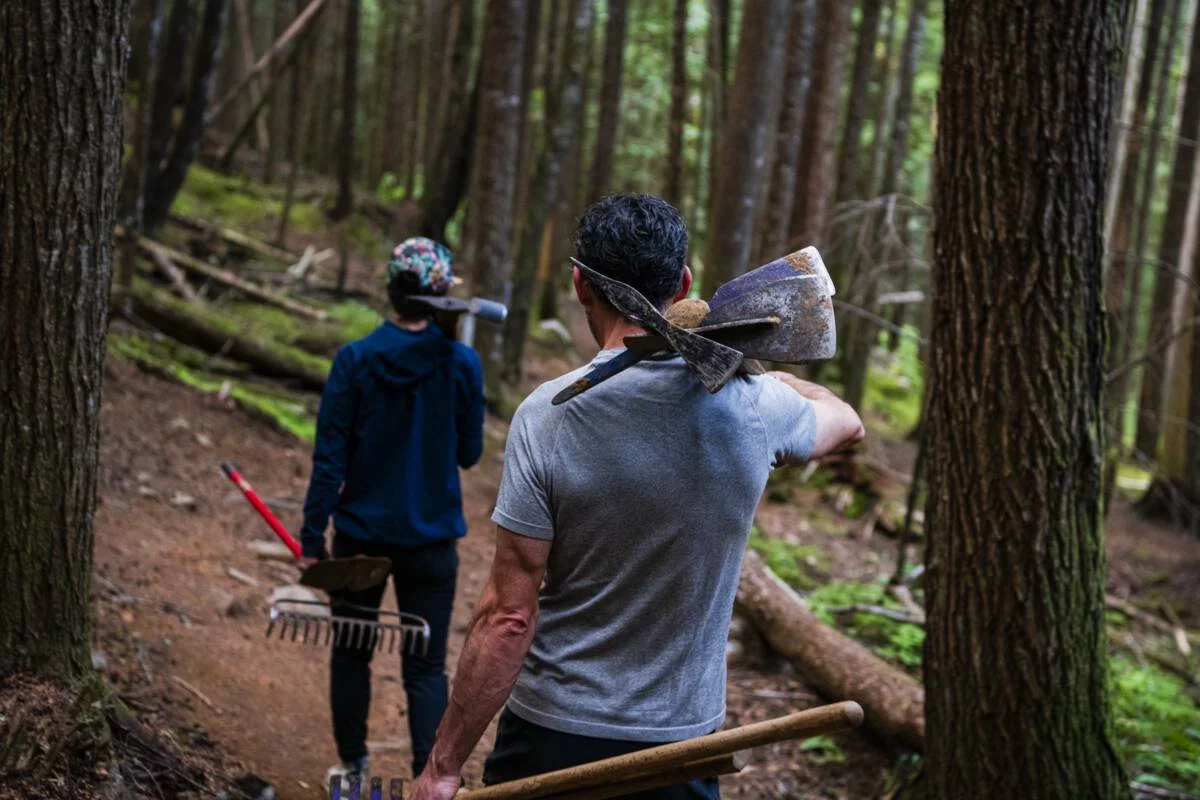
Terrace Off Road Cycling Association trail crew. Image: Northern BC Tourism and Mattias Fredriksson
B.C. Finance Minister Brenda Bailey released Budget 2026 earlier this week, and at the Outdoor Recreation Council of BC, we’re looking closely at what it means for parks, recreation sites and trails, volunteer groups, and the people who care for and enjoy B.C.’s outdoors.
The short version? Given the province’s financial reality, including a projected $13B deficit and global pressures such as U.S. tariffs, there are some positive signals, but also clear risks.
Funding for parks and recreation infrastructure is expected to decline, including a $6 million reduction to the Parks and Recreation Division, with program allocations still uncertain for several months. Combined with budget and staffing pressures, this will constrain the system’s ability to manage growth and maintain service levels.
The Province’s Look West economic strategy identifies tourism and outdoor recreation as sectors expected to support growth and diversification. That matters because outdoor recreation supports jobs, businesses, and communities across the province, especially in rural and smaller regions.
The economic impact goes well beyond tourism.
Outdoor recreation supports manufacturing, product design, and innovation, including companies that build and test outdoor gear here in British Columbia. Towns like Revelstoke, Squamish, Cumberland, and Kimberley aren’t just visitor destinations; they are places where products are designed, tested, and manufactured.
For example, G3 Genuine Guide Gear recently opened a research and development facility in Nelson. The company designs and tests backcountry skis, bindings, skins, and avalanche safety equipment in the terrain where those products are used. Investments like this show that outdoor recreation supports local jobs, product development, and a growing outdoor innovation sector. But this type of manufacturing depends on access to high-quality recreation environments. Companies need reliable trails, maintained infrastructure, and healthy landscapes to design and refine their products. Strong recreation systems help attract and sustain this economic activity.
Day-to-day operations are critical
Outdoor recreation depends on people - for maintenance, visitor safety, stewardship, monitoring, and planning. Without enough operational capacity, infrastructure alone cannot support growing demand. That gap becomes more serious as the Province plans for continued growth in tourism and outdoor recreation.
The current provincial hiring freeze makes this risk immediate.
Parks, recreation sites, and trail networks require consistent workforce capacity to maintain facilities, manage high-use areas, and protect natural environments. When hiring is constrained, the effects are felt quickly through reduced maintenance, increased pressure on infrastructure, and greater risk to visitor experience and environmental sustainability.
Volunteers cannot replace public responsibility
Outdoor recreation in B.C. also depends on a vast network of volunteer and community recreation organizations (see many of them here).
Trail groups, stewardship organizations, and local recreation clubs contribute thousands of hours each year maintaining infrastructure, managing facilities, and caring for outdoor spaces. The system functions because of them.
But volunteers cannot replace stable funding or core public services. For years, limited public capacity has shifted responsibility onto volunteer groups. That approach is not sustainable.
Demand is rising faster than system capacity
Nearly 80% of British Columbians participate in outdoor recreation. Participation continues to grow, placing increasing pressure on trails, parks, facilities, and natural areas.
At the same time, infrastructure is aging, climate impacts are increasing, and expectations for safety, access, and stewardship are rising. Meeting these pressures requires stable operating funding, long-term planning, and coordinated management across governments, Indigenous communities, and recreation partners.
Leverage existing tools: the Outdoor Recreation Fund
Government does not need to start from scratch. A practical mechanism already exists.
The Outdoor Recreation Fund of BC, established in 2023 with a $10 million grant from the Province, provides funding to community groups and First Nations for infrastructure, stewardship, access, and capacity building. These investments directly support economic development and community wellbeing.
Demand far exceeds available funding. The Fund is heavily oversubscribed and can currently support only about 15% of grant requests. Communities across B.C. are ready to invest in recreation but lack the resources.
Expanding and strategically deploying the Fund would strengthen local recreation systems, support volunteer organizations, and help communities respond to growing demand. It is a proven tool that should be scaled to match need.
A strategic choice for British Columbia
Investment in outdoor recreation produces clear returns: jobs, economic growth, stronger rural communities, improved health outcomes, safer communities, and long-term environmental stewardship.
If the Province expects recreation and tourism to drive growth, as outlined in Look West, it must fund recreation as essential infrastructure, with stable operating budgets, workforce capacity, partner support and long-term planning.
Anything less widens the gap between demand and what the system is capable of..
ORCBC will continue working with the Province, First Nations, land managers, recreation organizations, and volunteer groups to ensure B.C.’s outdoor recreation system has the support it requires. Our view is that outdoor recreation is not optional; it supports communities, drives economic activity, and sustains the landscapes that define British Columbia.
If you missed our recent op-ed in the Vancouver Sun - Funding for B.C.'s parks and outdoor recreation shouldn't be considered discretionary spending - read it here.